
Digital transformation is not achieved by technology alone. It requires people, skills, policies, innovation, and—most importantly—strong collaboration among the sectors that shape a region’s digital future.
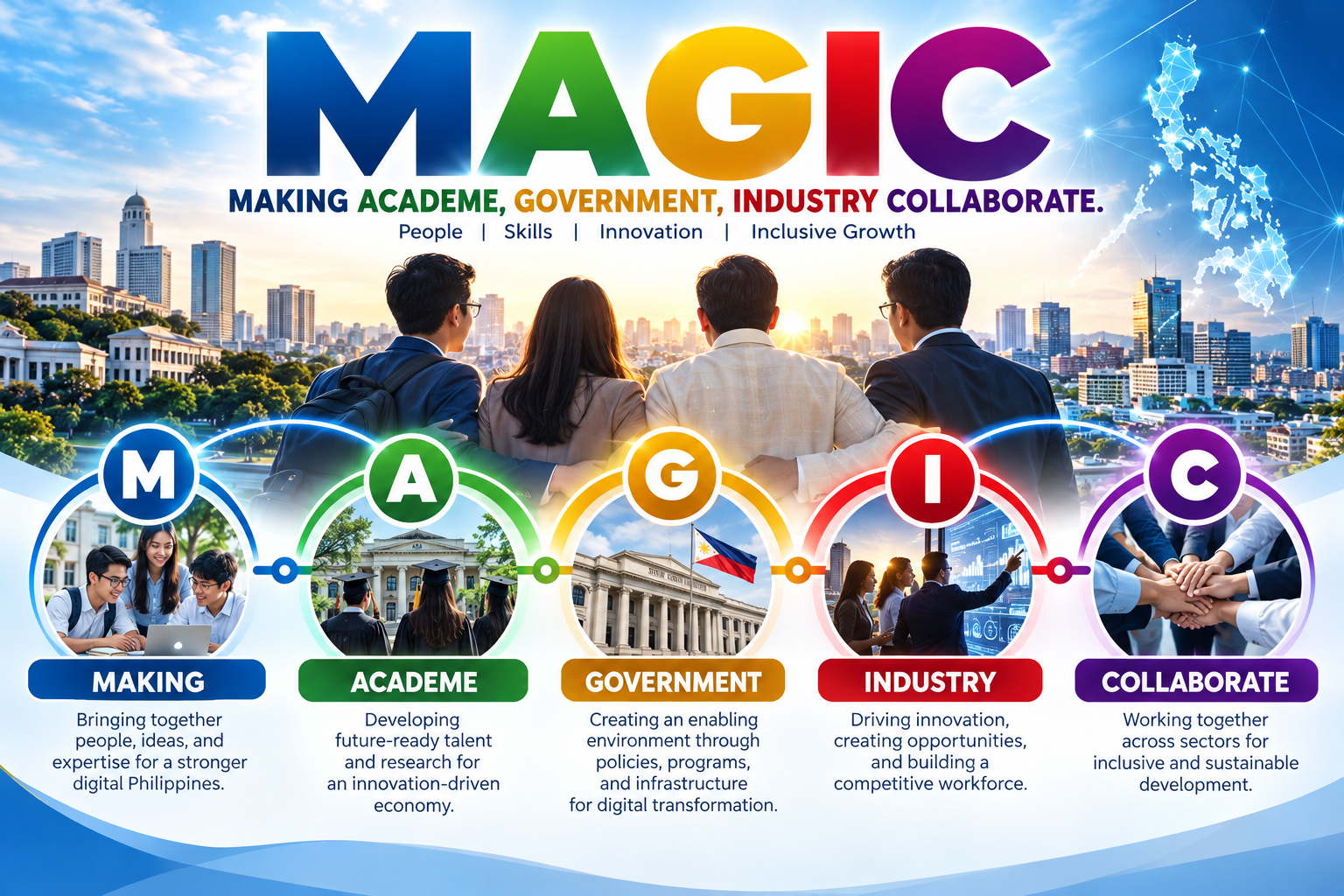
The MAGIC Framework — Making Academe, Government, Industry Collaborate — provides a practical way of bringing these sectors together to support digital transformation, workforce development, innovation, and inclusive economic growth.
At its core, MAGIC recognizes that academe, government, and industry have complementary roles. When these sectors work in isolation, opportunities can be missed. When they collaborate, education can respond better to industry needs, government programs can become more aligned with actual community requirements, and businesses can find the talent and innovation needed to grow.
Making Collaboration Happen
The first element of MAGIC is Making—bringing people, ideas, expertise, and opportunities together.
Collaboration begins by creating spaces where stakeholders can communicate, identify common challenges, and develop solutions together. ICT councils, local governments, schools, universities, technology organizations, businesses, and community stakeholders can serve as bridges connecting different perspectives.
Making collaboration meaningful means moving beyond meetings and discussions toward shared programs, projects, partnerships, and measurable outcomes.
Academe: Developing Future-Ready Talent
Academe plays a critical role in preparing people for an increasingly digital economy.
Universities, colleges, training institutions, and other learning organizations help develop the knowledge and skills needed by emerging industries. Through updated curricula, industry partnerships, research, internships, certifications, and technology-enabled learning, academe can help learners become better prepared for changing workforce requirements.
The MAGIC Framework encourages stronger connections between education and the real-world needs of the ICT and digital economy.
This can include collaboration in areas such as:
- Digital skills development
- ICT and technology training
- Industry internships and immersion
- Research and development
- Innovation and technology incubation
- Professional certifications
- Entrepreneurship and startup development
The objective is not simply to produce graduates, but to help develop future-ready talent capable of contributing to innovation and economic development.
Government: Creating an Enabling Environment
Government provides the policy direction, programs, infrastructure, and institutional support necessary for digital transformation.
Local and national government agencies can help create an environment where innovation and technology adoption can flourish. This includes improving digital public services, strengthening connectivity, supporting ICT programs, facilitating investments, and developing policies that respond to emerging technologies and workforce needs.
Government also has an important role in connecting different stakeholders.
Through ICT councils and other collaborative platforms, government can help bring academe and industry together to identify regional priorities and translate them into programs and initiatives.
Effective collaboration can help ensure that digital transformation is not limited to major business centers but reaches communities, local enterprises, workers, students, and underserved sectors.
Industry: Driving Innovation and Opportunity
Industry brings market knowledge, technology, investment, practical experience, and employment opportunities into the collaboration.
Technology companies, business organizations, IT-BPM firms, startups, telecommunications companies, and other enterprises understand the evolving demands of the marketplace. Their participation helps ensure that training and innovation programs remain relevant to actual industry requirements.
Industry can contribute through:
- Job and internship opportunities
- Industry-led training
- Technology demonstrations
- Research partnerships
- Startup mentorship
- Investment and business opportunities
- Professional certification
- Innovation challenges
Stronger industry-academe-government partnerships can help reduce the gap between what people learn and what employers need.
Collaborate: Connecting the Three Sectors
The final and defining element is Collaborate.
MAGIC is ultimately about creating sustained cooperation among academe, government, and industry.
Each sector brings different capabilities:
Academe develops knowledge and talent.
Government creates an enabling environment.
Industry provides technology, market opportunities, and employment.
Collaboration connects these strengths.
When these sectors work together, they can develop programs that are more responsive to local needs, create opportunities for innovation, strengthen digital skills, and contribute to a more competitive and inclusive digital economy.
From Connection to Action
The MAGIC Framework can serve as a platform for turning partnerships into action.
A regional ICT ecosystem can use the framework to ask important questions:
- What digital skills does industry need?
- How can academe prepare learners for those opportunities?
- What policies and programs can government provide?
- What research and innovations can address local challenges?
- How can stakeholders work together to create sustainable results?
These questions encourage stakeholders to move from fragmented initiatives toward coordinated action.
Building a Collaborative Digital Philippines
The future of the digital economy depends not only on technological advancement but also on the ability of institutions and communities to work together.
MAGIC — Making Academe, Government, Industry Collaborate — represents a collaborative approach to building the people, policies, capabilities, and partnerships needed for digital transformation.
By connecting people, skills, innovation, and opportunities, the framework can help strengthen regional ICT ecosystems and support the development of a more connected, innovative, and inclusive Philippines.
MAGIC in One View
M — Making
Bringing people, ideas, and expertise together.
A — Academe
Developing future-ready talent, knowledge, and research.
G — Government
Creating an enabling environment through policies, programs, and infrastructure.
I — Industry
Driving innovation, investment, employment, and technology adoption.
C — Collaborate
Working across sectors to turn shared goals into meaningful action.
MAGIC is ultimately about one idea: when academe, government, and industry collaborate, technology becomes more than a tool—it becomes a platform for people, opportunity, innovation, and inclusive development.