
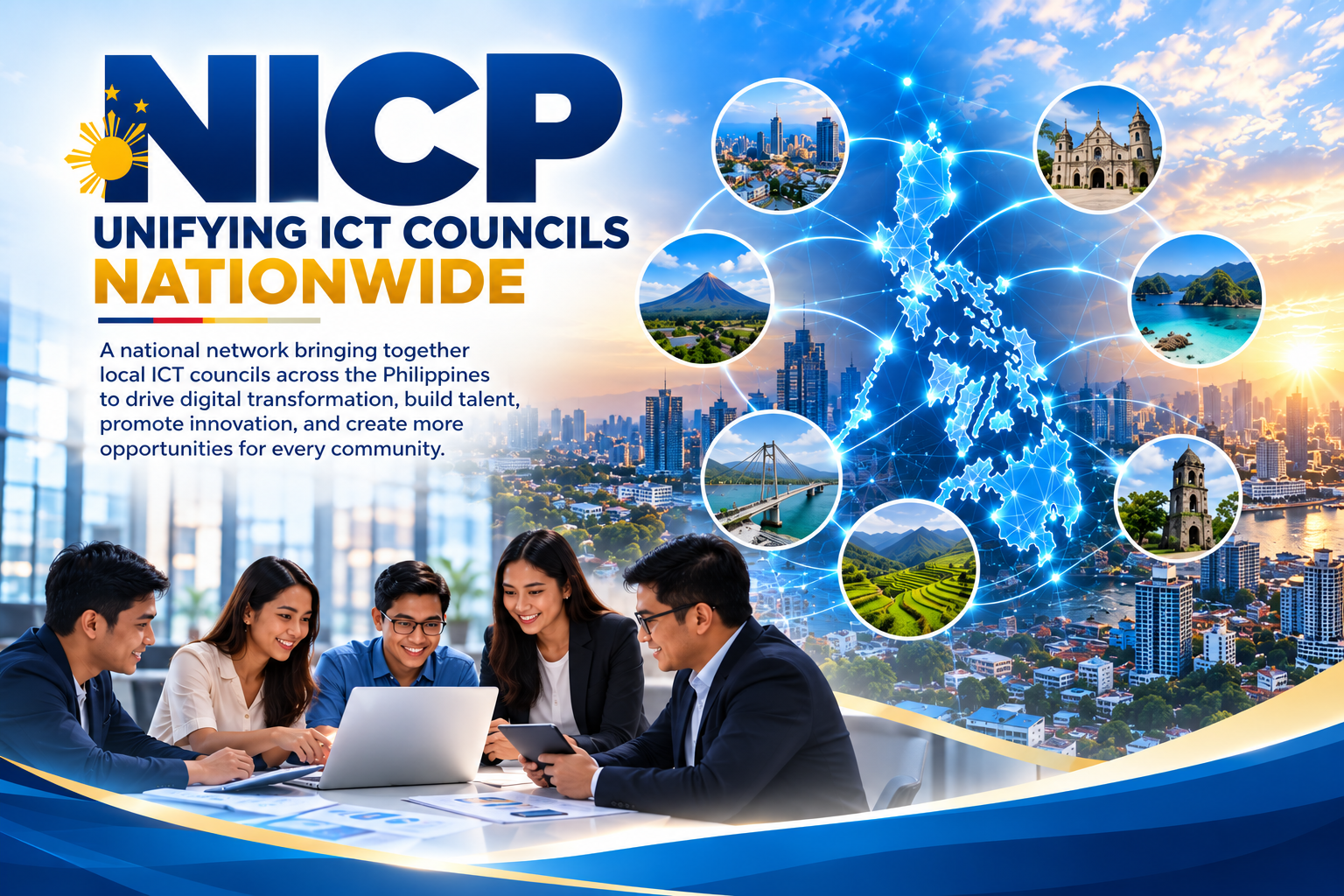
The digital transformation of the Philippines is not happening in one place. Across the country, local governments, universities, businesses, technology professionals, and communities are developing initiatives that use information and communications technology to improve public services, strengthen local economies, develop talent, and create new opportunities.
Connecting these local efforts is the National ICT Confederation of the Philippines (NICP), which publicly describes itself as a national network bringing together ICT councils across the Philippines.
A National Network of Local ICT Councils
ICT councils play an important role in developing local digital ecosystems. They bring together stakeholders within their respective cities and provinces to identify opportunities, address challenges, and promote the growth of the ICT sector.
However, local initiatives can have greater impact when they are connected to a broader national network.
NICP provides a platform through which local ICT councils can share experiences, exchange knowledge, build partnerships, and participate in nationwide ICT initiatives. This network helps connect regional and local perspectives with national conversations about digital transformation and the development of the Philippine digital economy.
The strength of the network comes from its diversity. Each ICT council operates within its own local environment, with different industries, educational institutions, government priorities, talent pools, and development challenges.
By bringing these councils together, NICP creates opportunities for local experiences and innovations to be shared across regions.
From Local Initiatives to National Collaboration
Digital transformation requires more than technology. It requires coordination among organizations that influence education, government services, business development, workforce preparation, and innovation.
This is where collaboration becomes particularly important.
A local ICT council may identify a shortage of digital skills. An academic institution may have the capacity to develop a training program. Industry may understand the specific skills required by employers. Government may be able to provide policy support, infrastructure, or resources.
When these capabilities are connected, a local challenge can become an opportunity for collaborative action.
NICP’s national network provides a platform for ICT councils to help facilitate these connections.
The MAGIC Framework
NICP also presents the MAGIC Framework — Making Academe, Government, Industry Collaborate — as a mechanism for bringing key sectors together.
The framework recognizes that each sector has a different but complementary role in digital development.
Making
Making represents the effort to bring people, organizations, ideas, and opportunities together.
ICT councils can serve as local platforms where stakeholders identify common priorities and develop collaborative initiatives.
Academe
Academe develops knowledge, talent, research, and future-ready skills.
Universities, colleges, and training institutions can work with industry and government to ensure that education and training respond to emerging technology and workforce requirements.
Government
Government provides policies, programs, infrastructure, and an enabling environment for digital transformation.
Local and national government institutions can also help connect ICT initiatives with broader economic and development priorities.
Industry
Industry contributes technology, investment, expertise, market knowledge, and employment opportunities.
Its participation helps ensure that digital skills and innovation programs are connected to actual market and workforce requirements.
Collaborate
Ultimately, MAGIC is about collaboration.
Academe, government, and industry can combine their respective capabilities to develop initiatives that address local needs while contributing to broader national development.
Strengthening the Philippine ICT Ecosystem
The combination of a national ICT council network and a collaborative framework provides a foundation for strengthening the country’s digital ecosystem.
Through collaboration, ICT councils can help facilitate:
- Digital workforce development
- Technology adoption
- Innovation and entrepreneurship
- Industry-academe partnerships
- Local digital transformation
- Knowledge sharing among regions
- ICT investment and economic development
- Technology-enabled public services
These efforts can take different forms depending on the needs and priorities of each locality.
Connecting Regions, Communities, and Opportunities
One of the important roles of a national network is creating connections that would otherwise be difficult to establish.
An ICT initiative developed in one city may provide ideas that can be adapted by another. A successful training partnership can become a model for another region. An emerging technology company can find potential partners through an ICT council network. Academic institutions can discover opportunities to work with businesses and government organizations beyond their immediate communities.
In this way, the network becomes more than a directory of organizations. It becomes a platform for knowledge exchange and collaboration.
A More Connected Digital Philippines
The Philippines has diverse communities, industries, educational institutions, and local governments. Their digital transformation journeys will naturally differ.
NICP’s role as a national network of ICT councils provides a mechanism for these different local ecosystems to remain connected.
Through initiatives such as the MAGIC Framework, the organization emphasizes the importance of bringing together the sectors that contribute to digital transformation: academe, government, industry, and other stakeholders.
The underlying principle is straightforward:
Local ICT ecosystems become stronger when they are connected, and national digital development becomes more meaningful when local voices are part of the conversation.
By unifying ICT councils across the country and encouraging collaboration among key sectors, NICP provides a platform for sharing knowledge, developing partnerships, and supporting the continuing growth of the Philippine digital ecosystem.